This time last year I had just returned from Japan where I had been researching everything to do with indigo. I had spent the previous twelve months researching and making contact with a range of indigo artists and I had organised a busy three weeks travelling around Japan to learn everything I could. I had wanted to travel to Japan ever since I has seen the work of Hiroyuki Shindo during my university days.
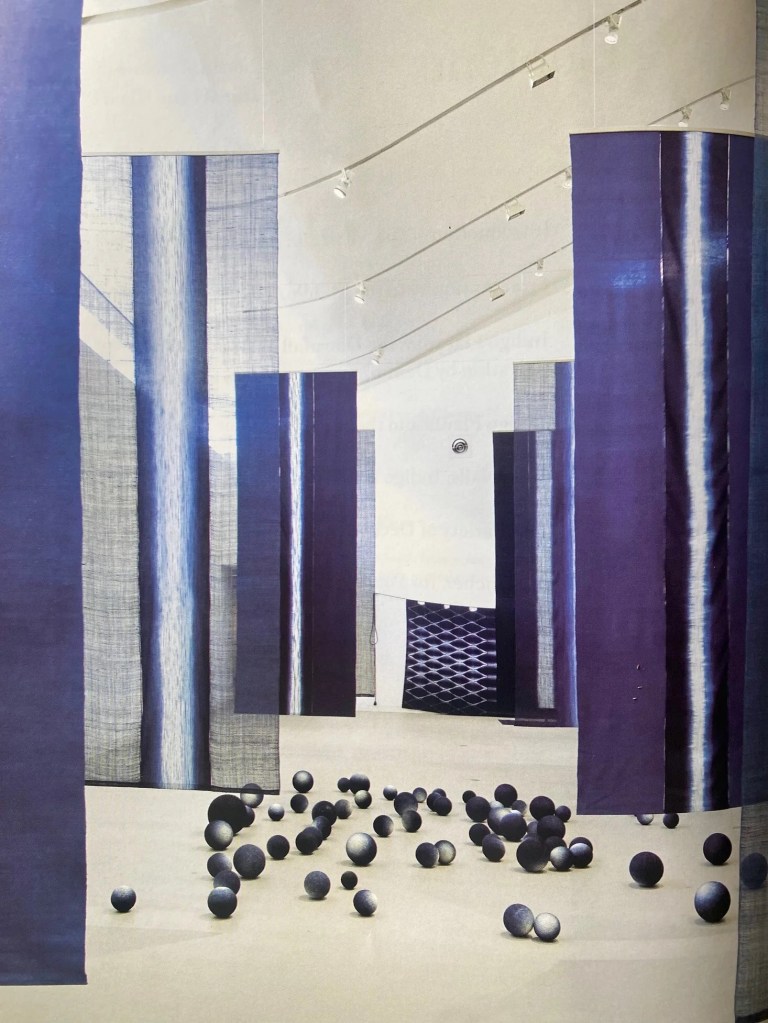
On my degree I had been captivated by indigo but was too young to really realise it’s potential and so it wasn’t until many years later when I attended a week long course with Jane Callender that my eyes were fully opened to its possibilities.

For twenty years I dabbled with this mysterious blue dye, teaching my college students the basics of it, hoping that one day I would be able to spend some time really being able to immerse myself in learning more about what I could get it to do.
During my natural dye studies I was able to return to exploring indigo, fresh leaf and natural vats along with growing and processing woad, this reignited my interest in how a natural blue colour can be achieved on fabric and I began to explore stitched shibori patterning in more detail thanks again to Jane Callender and her online shibori stream course.
Many of you know that I had a big health upheaval in 2005 and in 2023 I received some news that could have put me back in that situation, thankfully all was fine but for about a week I kept thinking if it’s back this could be it and I’ll never get to Japan. So once I received the good news I came home, phoned my textile buddy, Jude Kingshott, said the magic word Japan, the reply was yes and I booked two flights!
Fast forward twelve months and Jude was at my door to pick me up and we were off on my bucket list trip to Japan. It took fourteen hours to arrive in Japan and my exploration of indigo began as soon as I landed at Tokyo Haneda airport.
Before I travelled I had seen that the airport was celebrating its 70th birthday and that they had commissioned the Buaisou studio to create a new logo for the airport, titled Haneda Blue. The exhibition closed the day after we arrived so we found our bags, picked up the pocket Wi-Fi and hopped on the inter terminal bus. We had to travel to the terminal furthest away from where we had arrived but were greeted by an installation showcasing 70 different shades of indigo blue.
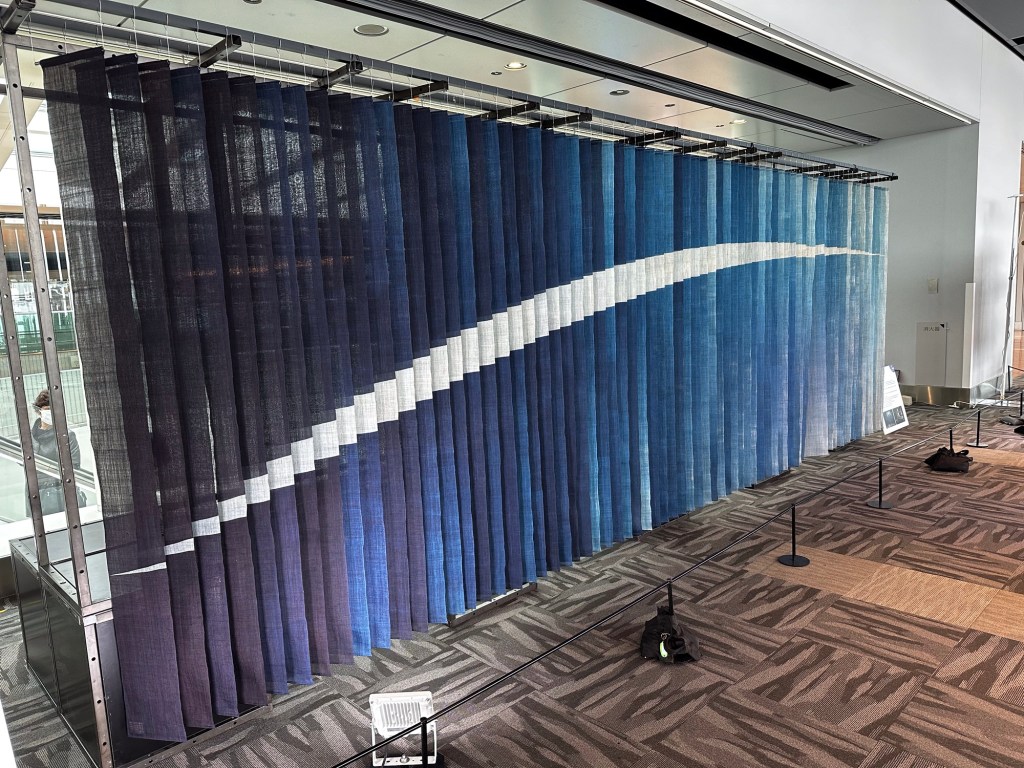
What an induction to Japanese indigo work, the Buaisou studio use a fermented indigo vat and although I had read about this type of vat I had never seen, in the flesh, up close, the colours that can be achieved from this way of extracting and using the indigo blue colour.
Unlike traditional natural dyeing Indigo is built up on the fabric, so to get a darker colour you have to dip and redip and redip the fabric in the vat. So to achieve the 70 shades of blue in Buaisou’s piece imagine the amount of dips that are needed to get those darker colours. This was also the first time that I had seen, up close, contemporary katazome fabric, where a rice paste resist has been used to maintain the white areas of the cloth. The precision of the piece captivated me and I soon found out that the Japanese truly believe in if you are going to do something do it well. Whether they were directing the trains on the railways or creating wonderfully intricate pieces of art they do it well, with thought, intention and an eye for detail that I feel quite a home with.
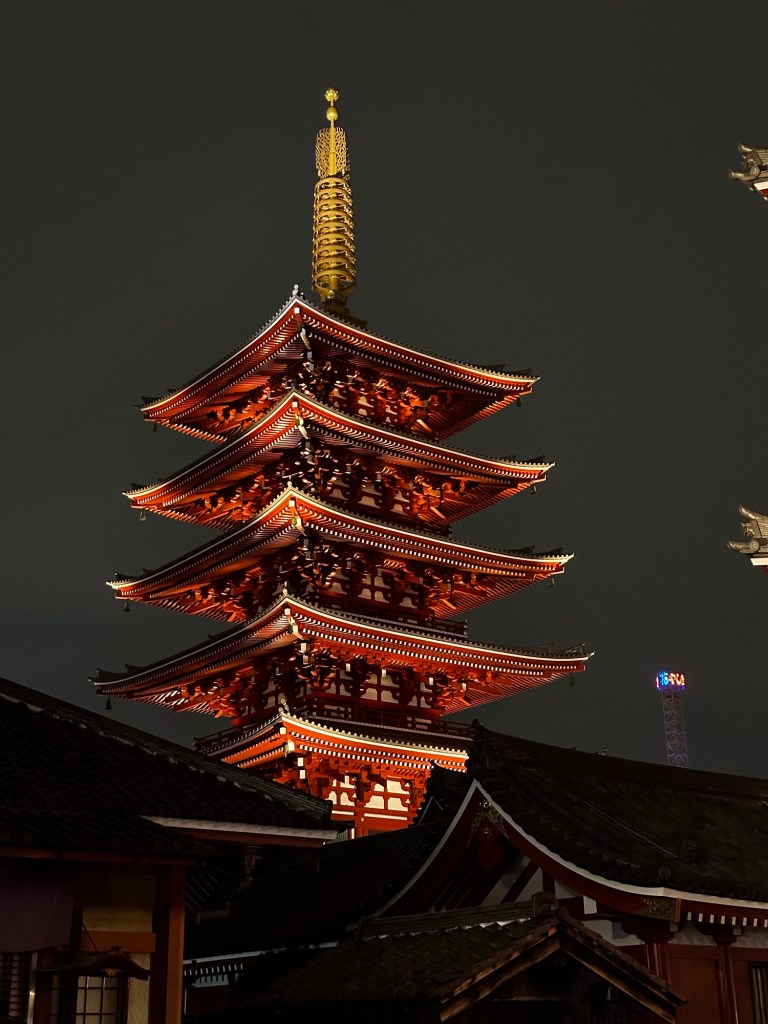
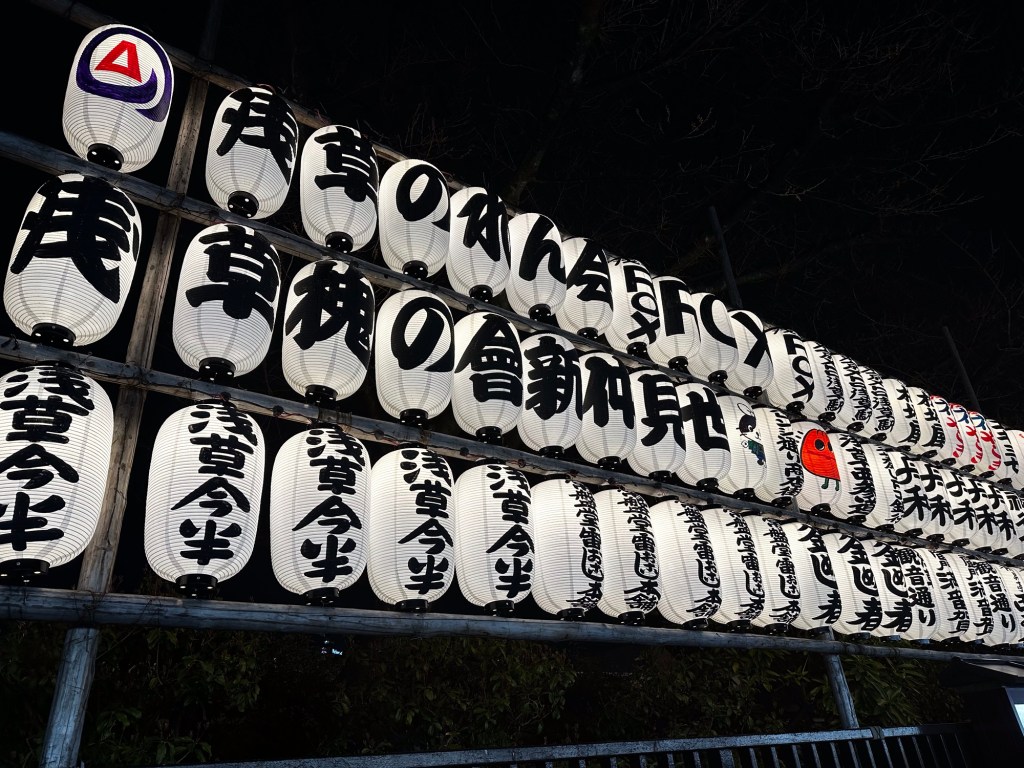
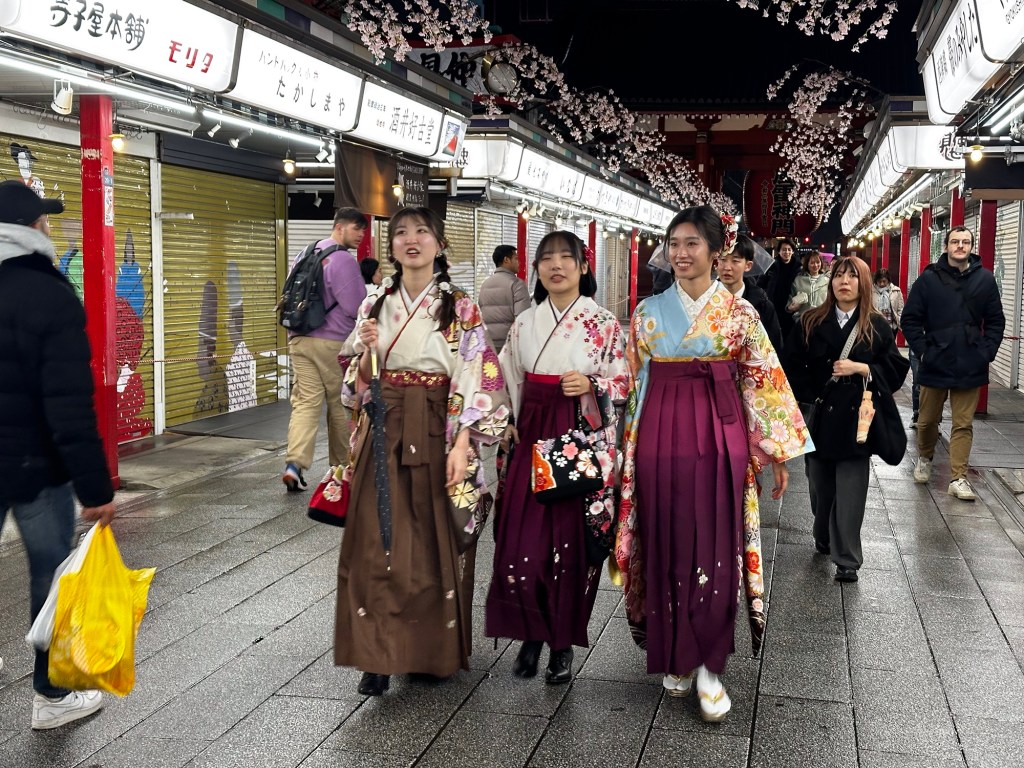
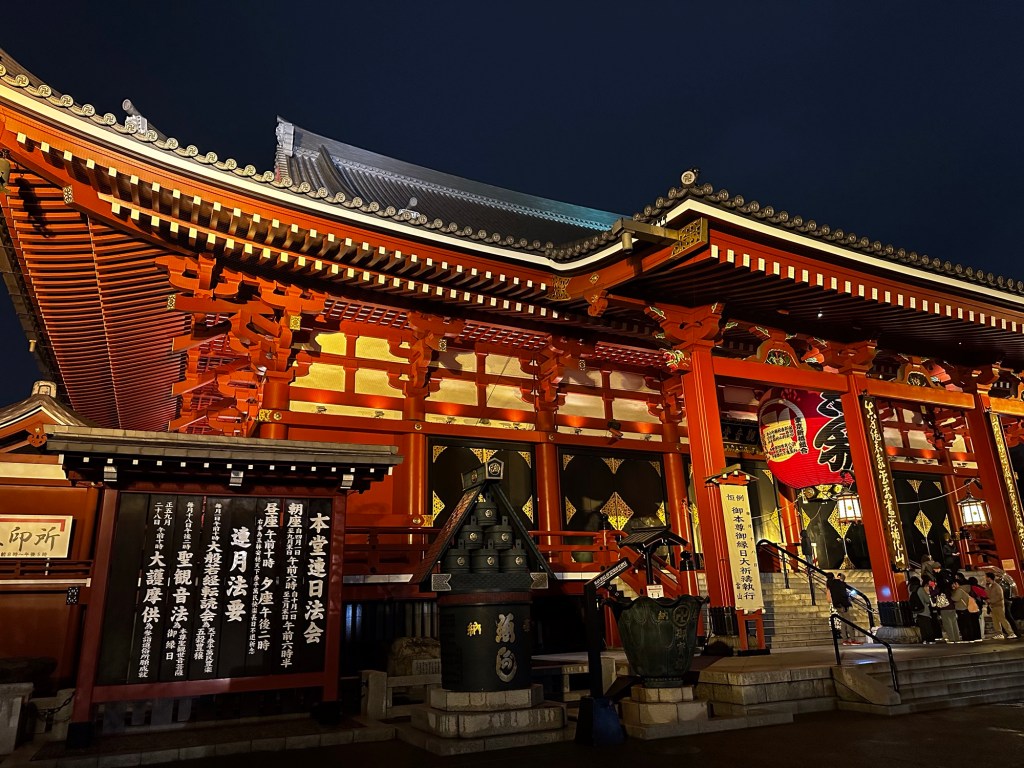
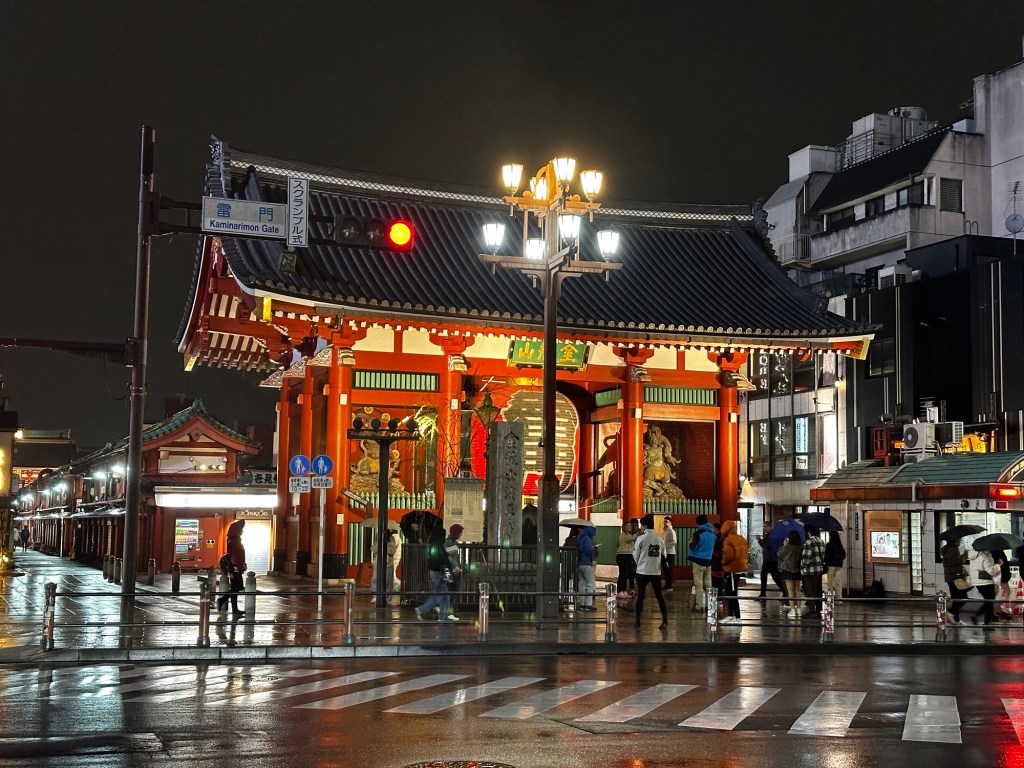
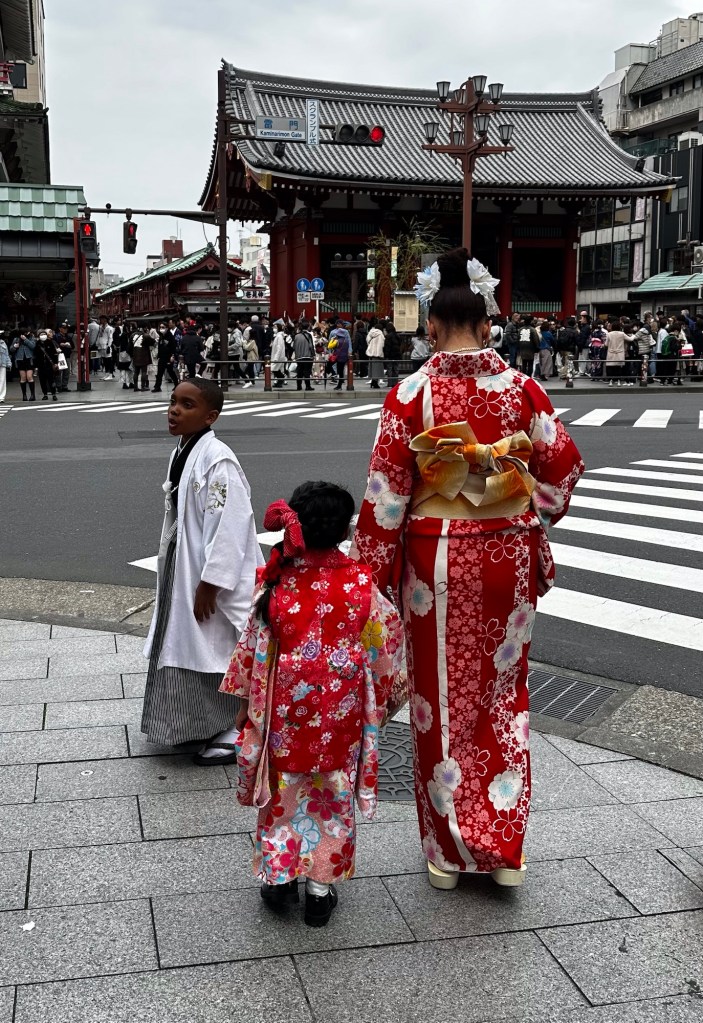
I left the airport full of indigo questions and headed into Tokyo to find my hotel and regroup. Later that evening Jude and I explored our local area, Asakusa, and I got my first taste of Japanese culture visiting the Senso-ji temple.
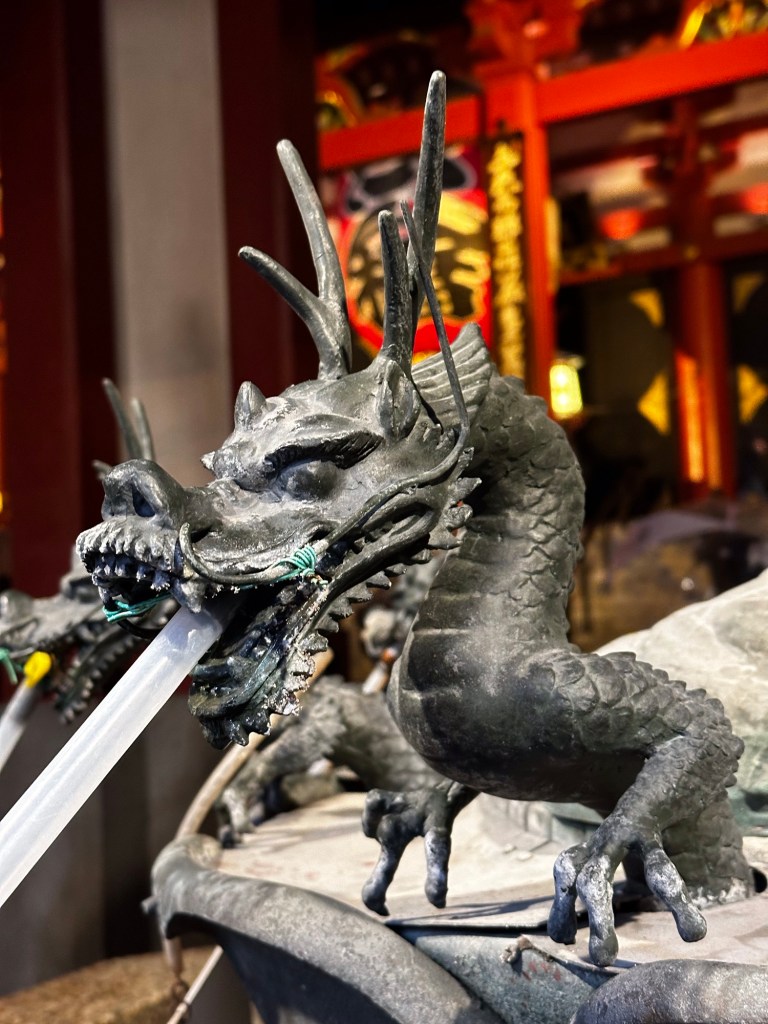
I had naively thought that I would escape jet lag, alas I did not and we rolled into bed to try to get ourselves into Japanese time. Tomorrows visit was going to be the dye store, which luckily for us was just around the corner from our hotel.
When organising the trip itinerary I had found that in Tokyo there was an amazing looking textile dye shop, the only day that I could squeeze it into our plans was our first full day in Japan. So after breakfast we headed round the corner to see what it was all about. When we entered the shop I thought that we wouldn’t be there long as it was tiny, three customers and the space was full, oh how wrong I was, three hours later we were paying for our supplies!
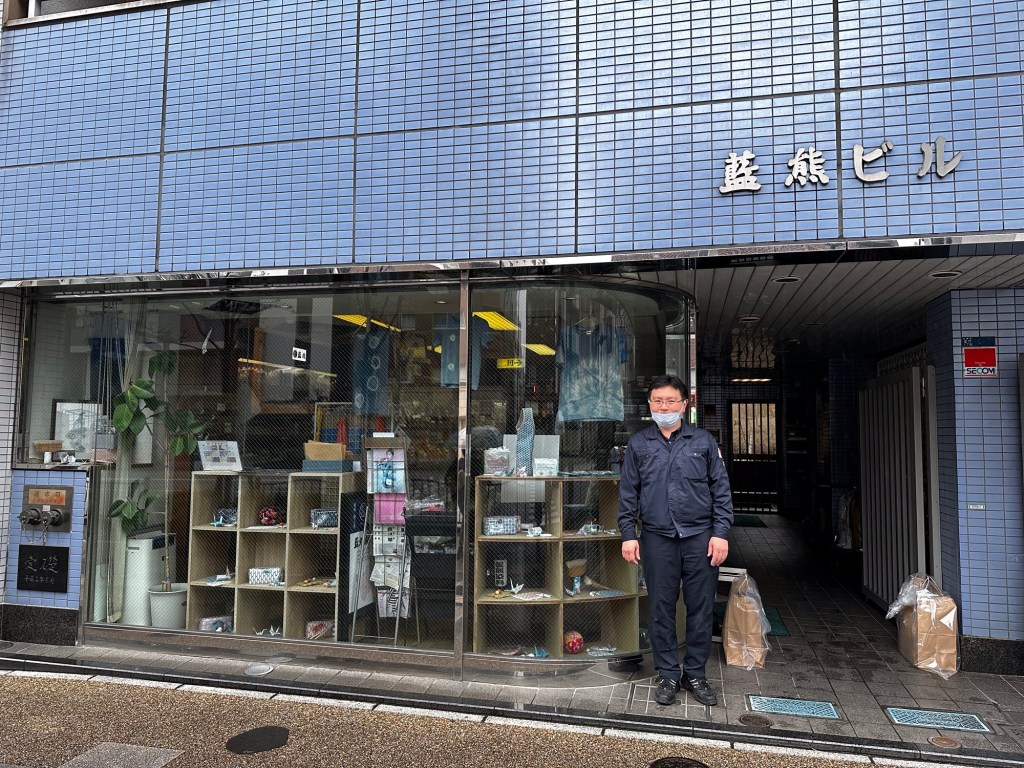
What we thought was the entirety of the shop turned out to be just the downstairs. This space houses all of the dyes, dyeing sundries, and lots of equipment. I had researched some of the techniques that I would hopefully encounter on my travels before travelling to Japan and had a good idea of items I would like to purchase but I have to admit I did feel a little overwhelmed at the prospect of finding what I thought I needed. Having undertaken my natural dye course I of course wanted to see what dyes I could get so that area was my first stop.

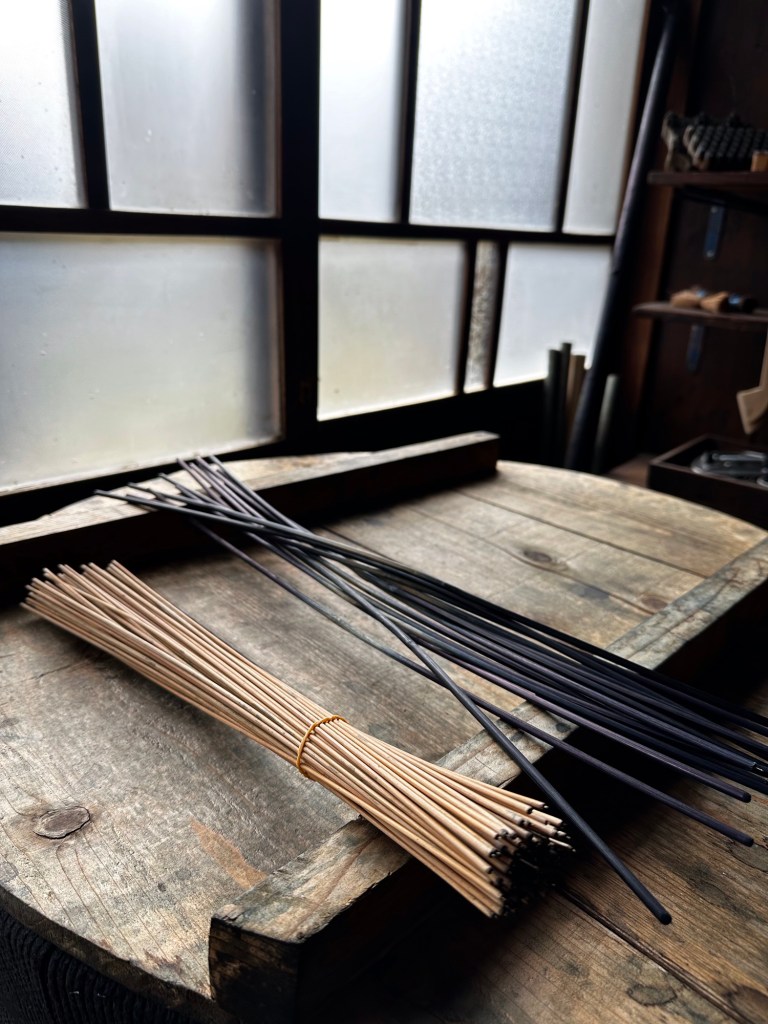
I had had a look on the dye shops website before travelling to Japan and had written myself a shopping list, Yuta, who works in the shop speaks very good English so he was tasked with explaining anything to us that we didn’t understand. He was also really good at showing us other items that would compliment our existing purchases! I found shinshi poles, small flexible bamboo rods that have a tiny pin in each end, which are used for stretching your fabric when dyeing. They keep the fabric taut which helps to achieve consistent dye absorption and drying. Of course I had to have some and in varying sizes!
My next purchase was a Hariki (Harite), this is another stretching device, which is used to suspend fabric taut, between two poles, for applying dye and paste. They are a piece of wood with very sharp metal spikes in one side that you press your fabric onto, once your fabric is secure the other half of the Hariki is clamped on top and that side of your fabric is secured. The same is done to the other side of the fabric and then the fabric is suspended between two poles.
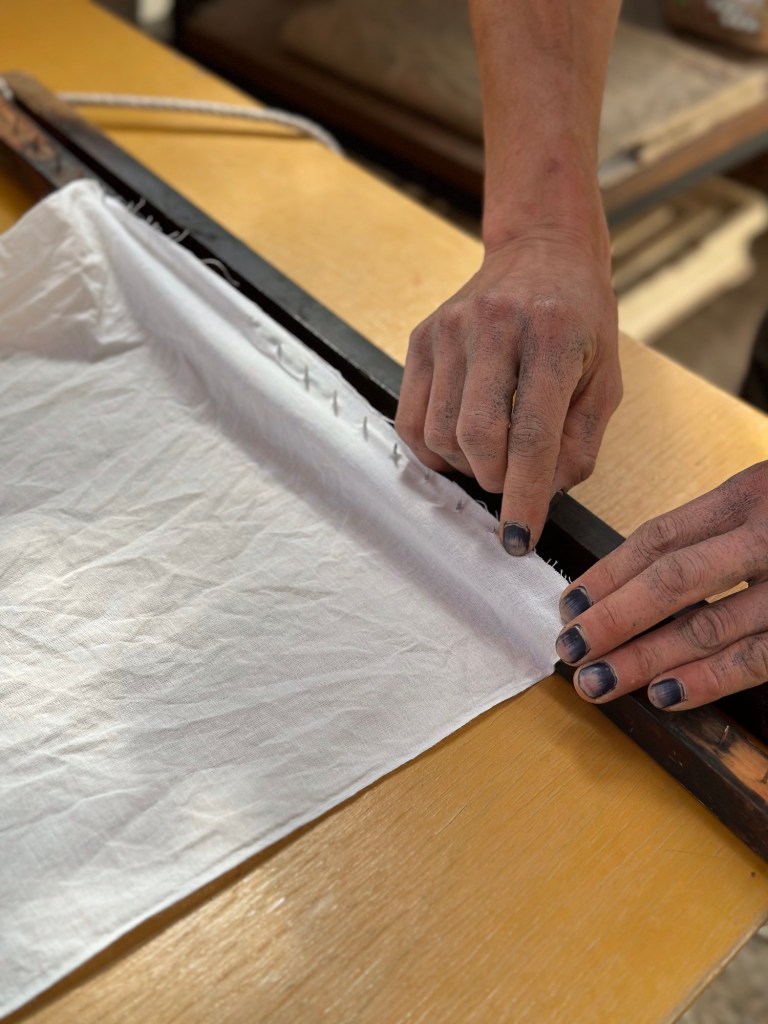
There was an array of brushes in the store, all beautifully handcrafted, I couldn’t resist purchasing one of two for applying dye to fabric in large , smooth strokes. The brushes are often made out of deer hair they are beautifully soft, hold and apply the dye smoothly and considering they are handmade are not that expensive. Yuta was great in explaining which brushes were used for particular techniques so I could purchase items that were going to be useful rather than ones that ‘looked nice’ but that I would probably never use. He also showed us Aibana ink, ink that disappears in water, similar to our disappearing fabric pens so of course that had to be purchased along with another little round brush that could be used to apply the ink through a stencil.

Once we had thoroughly explored the store we thought that’s it we can now drop off our purchases at the hotel and decide how to spend the rest of our day. Little did we know that this was only the start, Yuta said, are you ready to go upstairs we have a floor dedicated to fabric!! I think you can guess we didn’t need any encouragement. We headed outside to the back of the little alleyway and hopped into the lift. Before we got to the top floor Yuta said, lets stop here, we have an artist in today and I think you’d like to see what they’re up to.
The second floor of the premises houses a small teaching studio space and as the shop is developing and more visitors are finding them from abroad they are expanding their offer. Lots of the courses are an introduction to techniques, providing an insight into what can be achieved and then of course you can purchase any supplies needed.
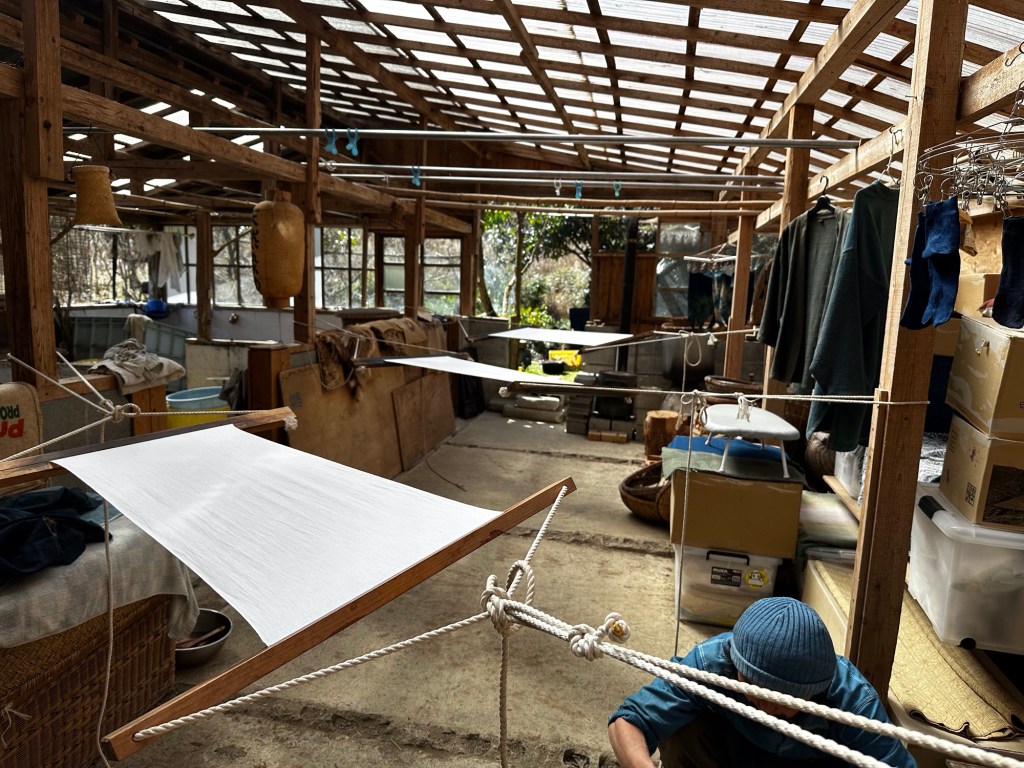
When I visited Mr Saida was just setting up for a Sekidashi and Hikizome workshop and was really happy to show us what he was going to be teaching. He was showing students how to extract natural dyes and apply them evenly to fabric using some of the tools, Harite, that I had just purchased. Since my return from Japan, the course programme has developed further so I’m sure I will be tempted to book should I return to Tokyo.

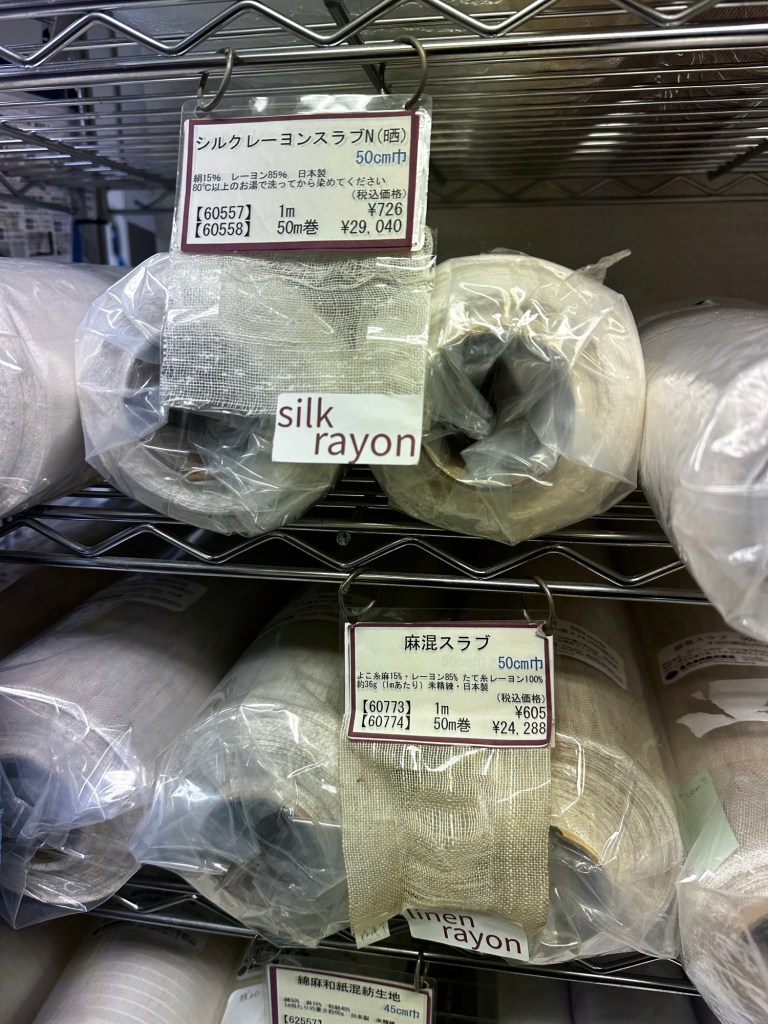
Once we had explored the teaching studio Yuta popped us back into the lift and up we went to the top floor. This floor is full of fabric on wire racking, lots of the usual cotton fabrics but in the Japanese width of 35cm, with one or two more special items. I have to admit I didn’t know where to look first but resisted buying everything on the floor and just went for some cotton in the narrow width, as it is not something that I can purchase here in the UK, with a couple of metres of some more unusual fabrics to test out what happens when they’re naturally dyed.
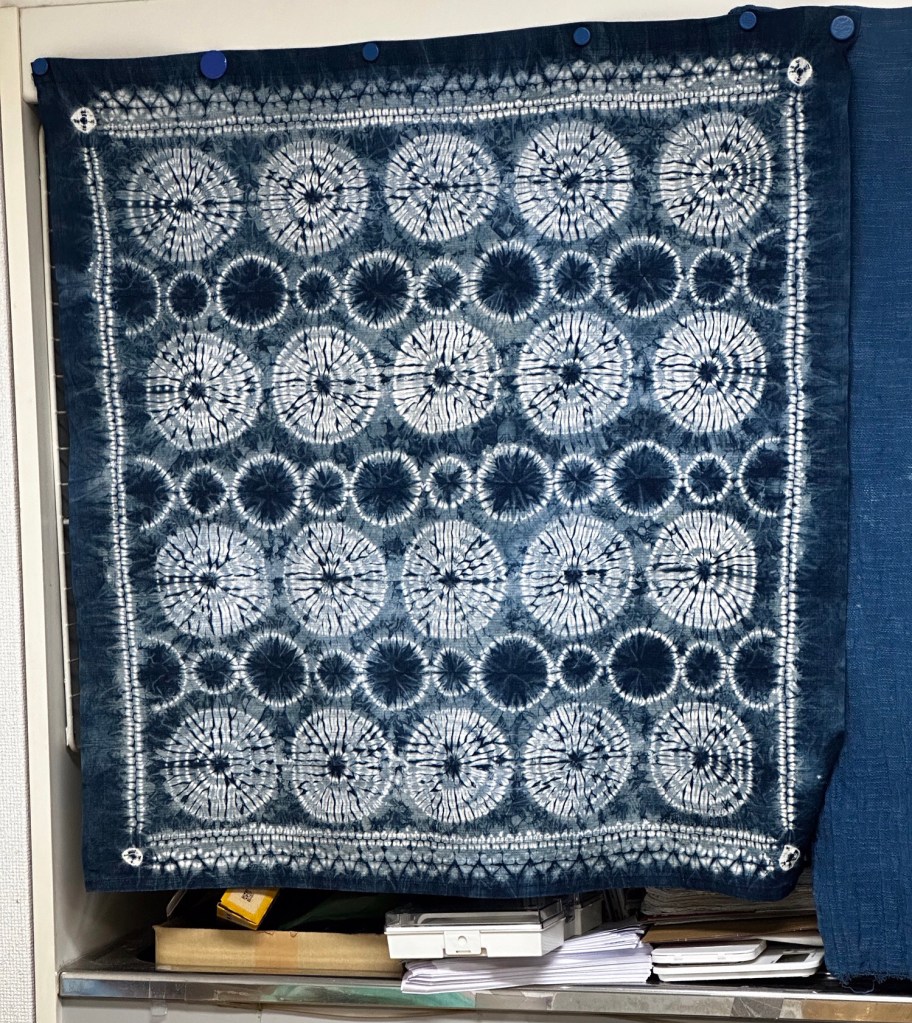
At the end of this visit I encountered my first piece of indigo shibori work, a small, simple piece that was hung up just at the back of the space, behind the fabric cutting area. It included the Japanese larch pattern and I smiled to myself as this was one of the first patterns I produced, with Jane Callender, when I was beginning to explore indigo all those years ago, it felt as they say as if I had come ‘full circle’.
So my first outing in Tokyo was a success I think I probably broke the record for how much of my budget I could spend on day one and on returning to my hotel to drop off my purchases the reality hit that I may need another suitcase!, particularly if my purchasing continued in the manner that it had started. Besides the additional suitcase and bank loan, to help fund the next three weeks, some ingenious excuses to the other half on my return as to why these items were an absolute must purchase wouldn’t go amiss.
If you’ve enjoyed reading this post please consider signing up to my blog, the sign up area is on my homepage. I have lots more tales from Japan coming up which I hope you’ll find interesting.


Leave a Reply